
AI for Bike Shops in Australia: Book Every Service Before the Christmas Rush (2026 Guide)
Last updated: November 2026.
 By Dr Priya Jaganathan, Certified AI Tech Stack Consultant · Pivot 2 Thrive · Updated 15 November 2026 · 7 min read
How independent bike shops can use an AI receptionist and simple automations to fill the workshop and convert Christmas enquiries without hiring another person.
AI for bike shops is not about replacing the mechanic who knows every groupset by sound. It is about answering the phone, the website chat and the Instagram DMs while that mechanic is elbow-deep in a hydraulic brake bleed.
From November to January, most Australian bike shops hit the same wall: kids' Christmas bikes, summer service bookings and new riders asking basic questions, all at once. Every unanswered enquiry is a sale or a service that goes to the shop down the road.
AI for bike shops works best on the repetitive front-of-house work: answering calls and messages 24/7, booking workshop services into real calendar slots, sending pick-up and service reminders, and following up Christmas bike enquiries. Staff stay on the tools and the shop floor, and fewer enquiries go unanswered.
I'm Dr Priya Jaganathan — Go High Level Certified Admin, Certified AI Tech Stack Consultant and keynote speaker. At Pivot 2 Thrive I build these systems for Australian businesses every week, so this guide is written from the build, not the brochure.
AI for bike shops is a front desk that never gets interrupted
AI for bike shops is a set of tools that answer customer questions, book services and follow up enquiries automatically, using your own prices, opening hours and workshop capacity. The core pieces are an AI receptionist for calls, a chat assistant for your website and social inboxes, and a CRM that keeps every conversation in one place.
It handles the questions you answer twenty times a day: what a basic service costs, how long a wheel true takes, whether you stock a particular size, and when the shop is open.
Anything that needs judgement, such as a warranty claim or a full bike fit, is passed to a person with the details already captured. Workshop-based businesses have a lot in common here, and our guide to AI for mechanics and auto repair shops covers the same booking pattern.
Why bike shops lose enquiries every summer
The market is big. According to the Australian Sports Commission's AusPlay survey, an estimated 2,005,000 Australians aged 15 and over cycled at least once in 2024, including BMX and mountain biking. Each of those riders needs tyres, tubes, servicing and eventually a new bike.
Demand is also seasonal. Christmas brings first bikes for kids and e-bike purchases, and warmer weather brings neglected bikes out of the shed and into your workshop queue.
Meanwhile, the people answering the phone are the same people building wheels and fitting customers. When the floor is busy, the phone rings out, and the caller tries the next shop on Google Maps. Our guide to AI for car detailing businesses shows the same summer squeeze in another trade.
How to set up AI for your bike shop in 6 steps
This is the order we would build it for a one- or two-location independent shop. Most shops can have the basics live in two to three weeks.
1. Write down your top 30 questions. Ask staff what customers ask every day: service prices, turnaround times, e-bike battery checks, kids' bike sizing, trade-ins and lay-by. These become the AI's knowledge base, so be specific about prices and what each service includes.
2. Turn workshop capacity into bookable slots. Instead of "bring it in whenever", set daily drop-off slots by service type, such as four general services and two e-bike diagnostics a day. The AI can then book real capacity rather than promising a time the workshop cannot meet.
3. Put an AI receptionist on the phone. Calls that ring out after three or four rings divert to the AI, which answers questions, books a service slot and texts a confirmation. Staff see a summary of every call in the CRM.
| Enquiry type | Without automation | With an AI front desk |
|---|---|---|
| Service booking call | Rings out while staff serve customers | Answered, booked and confirmed by SMS |
| "What size bike for my 8-year-old?" | Instagram DM answered days later | Instant answer plus a link to book a fitting |
| Christmas bike enquiry | Forgotten once the customer leaves the shop | Follow-up sequence until they buy or opt out |
| Bike ready for pick-up | Staff phone each customer | Automatic SMS with opening hours |
| Annual service due | No reminder sent | Reminder 12 months after the last service |
4. Connect website chat and social inboxes. Route your website chat, Facebook and Instagram messages into the same inbox, with the AI answering first and handing over to staff when a sale is close.
5. Automate pick-up and reminder messages. When a mechanic marks a job complete, the customer gets a text that their bike is ready. Twelve months later, they get a service reminder with a booking link.
6. Follow up Christmas enquiries. Anyone who asks about a kids' bike or e-bike gets a short follow-up sequence: sizing tips, stock updates and your Christmas trading hours. If you are closing over the break, set up holiday closure auto-replies so January bookings still land.
Start with the phone and workshop bookings, because that is where most lost revenue sits. Add the rest once staff trust the system.
Your mechanic should be fixing bikes, not answering the same sizing question for the tenth time today.
An Australian example: a Perth bike shop in December
Here is an illustrative scenario. A family-owned bike shop in Perth's northern suburbs has three staff and one workshop mechanic, and December is their busiest month.
They set up an AI receptionist to catch calls that ring out, define six workshop drop-off slots a day, and connect their website chat and Instagram to one inbox.
During the Christmas rush, parents asking about kids' bike sizes get an instant answer and an invitation to come in for a fitting. Service calls are booked into real slots, so the mechanic is no longer buried under unplanned drop-offs.
The owner notices it in January: the workshop calendar is already full for the first two weeks, and staff spent December selling bikes instead of answering the same phone questions.
AI mistakes bike shops should avoid
- Vague service pricing. If the AI can only say "it depends", customers call someone else. Give clear starting prices and what each service includes.
- Booking more than the workshop can handle. Unlimited bookings create week-long waits. Set real daily capacity per service type.
- No human handover. Warranty claims, fittings and high-value e-bike sales need a person. Make sure the AI flags these to staff straight away.
- Forgetting stock changes. Update the knowledge base when popular models sell out, or the AI will keep promising bikes you no longer have.
Seasonal businesses face the same pattern. See how surf schools use AI to fill every lesson without juggling the phone.
Frequently Asked Questions
Can AI answer phone calls for a bike shop?
Yes. An AI receptionist can answer calls when staff are busy, explain service prices and opening hours, book workshop slots and send an SMS confirmation. Complex questions are passed to staff with a call summary.
How much does AI cost for a small bike shop?
Costs depend on call volume and the tools you choose, so get a quote based on your enquiry numbers. Most small shops start with an AI receptionist and workshop booking, then add social inbox automation once the basics are working.
Will customers know they are talking to AI?
They should. Tell customers they are speaking with an AI assistant and offer a quick way to reach a person. Most customers care more about getting a fast, accurate answer than who gives it.
Can AI book bike services into our workshop calendar?
Yes. When you set daily service slots by job type, the AI books customers into real available capacity and sends confirmations and reminders. That stops the workshop being flooded with unplanned drop-offs.
Does AI help sell more bikes at Christmas?
It helps by answering sizing and stock questions instantly and following up people who enquired but did not buy. The sale still happens in store, but fewer enquiries are forgotten.
How many Australians ride bikes?
According to the Australian Sports Commission's AusPlay survey, an estimated 2,005,000 Australians aged 15 and over cycled at least once in 2024, including BMX and mountain biking.
Related Articles
Our services
- PowerPivot Leads Pro — AI lead generation and follow-up
- AI Receptionist Agent — answer every call, 24/7
Keep reading
 AI for Mechanics and Auto Repair Shops in Australia: Stop Missing Booking Calls
 AI for Car Detailing Businesses in Australia: Book More Details Before the Summer Rush
 AI for Surf Schools in Australia: Fill Every Lesson Without the Phone Juggling
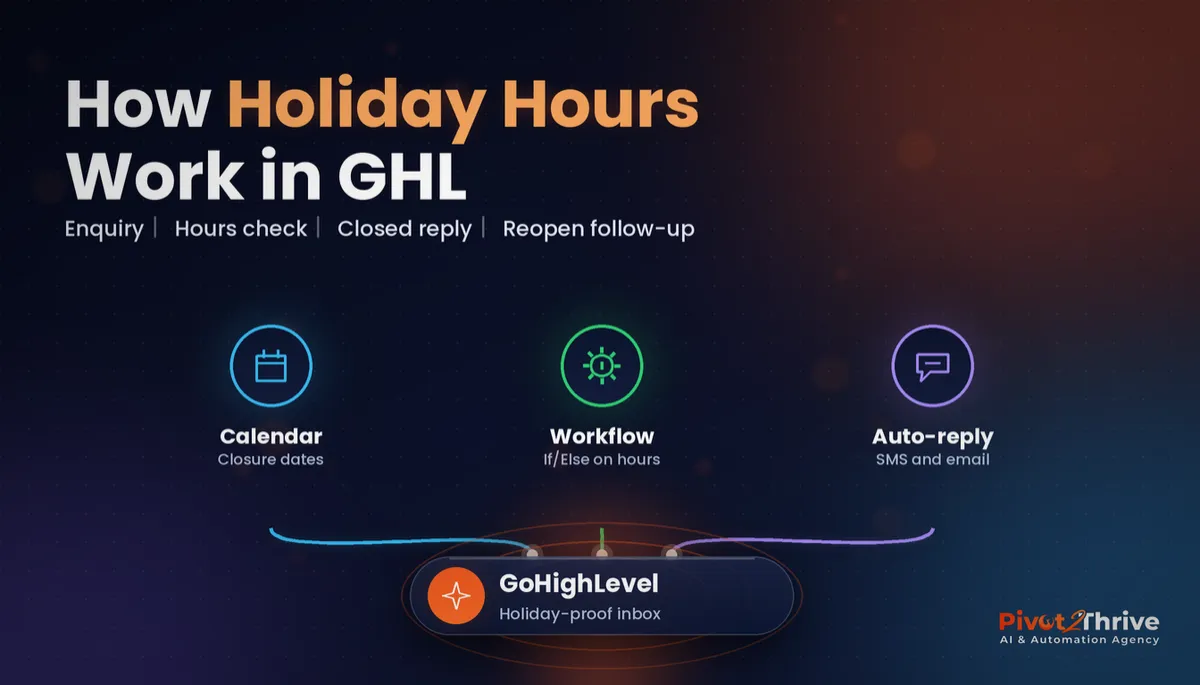 GoHighLevel Business Hours: Set Up Christmas Closure Auto-Replies That Still Capture Every Lead
Everything else