
AI for Community Pharmacies in Australia: Book More Vaccinations and Take Routine Calls Off the Counter (2026 Guide)
Last updated: November 2026.
 By Dr Priya Jaganathan, Certified AI Tech Stack Consultant · Pivot 2 Thrive · Updated 1 November 2026 · 6 min read
How Australian community pharmacies can use an AI receptionist and simple automations to handle routine calls, book vaccinations and free pharmacists for the counter.
AI for community pharmacies in Australia is not about replacing the pharmacist. It is about taking the routine calls ("are you open?", "is my script ready?", "can I book a flu shot?") off the counter, so the people with the clinical training spend their time on patients instead of the phone.
An AI receptionist can answer opening-hours, stock-availability and booking questions, book vaccination and service appointments into your calendar, and pass anything clinical straight to a pharmacist. Keep it out of clinical advice, set clear handover rules, and it gives your team back hours every week.
I'm Dr Priya Jaganathan — Go High Level Certified Admin, Certified AI Tech Stack Consultant and keynote speaker. At Pivot 2 Thrive I build these systems for Australian businesses every week, so this guide is written from the build, not the brochure.
AI for community pharmacies is a front-desk assistant, not a pharmacist
AI for community pharmacies is a voice or chat assistant that answers the predictable, non-clinical questions a pharmacy gets all day, books service appointments, and routes everything else to a human.
In practice it is usually three pieces working together: an AI receptionist on the phone line, a chat assistant on the website, and a booking calendar with automatic SMS reminders.
It belongs to the same family as the systems in our guide to AI receptionists for Australian medical centres, with one big difference: pharmacies get far more short, repetitive calls and walk-in traffic at the same time.
Why Australian pharmacies feel the phone pressure
Pharmacy is one of the busiest front doors in Australian healthcare. According to the Pharmacy Guild of Australia's Vital Facts on Community Pharmacy (January 2026), there were 6,013 community pharmacies as of June 2025, handling more than 443.6 million patient visits a year.
The same Guild fact sheet counts 2,127 pharmacies open after hours, including weekends. Every one of those extra hours is another stretch where the phone rings while the dispensary is busy.
Services have grown too. Vaccinations, medication reviews and other in-pharmacy services all need booking, reminding and rescheduling. That admin lands on the same counter staff who are serving customers face to face.
A missed call is often a missed booking. If a patient can't get through about a vaccination, they ring the next pharmacy. That is exactly the leak a missed-call text-back system plugs.
How to set up AI in a community pharmacy in 6 steps
This is the order I recommend for an independent or small-group pharmacy. Most of it can be live within two to three weeks.
1. Log a week of calls. Tally every call by reason: hours, script status, stock, bookings, clinical questions, other. You will usually find a large share are routine and repeatable, and those are what the AI handles.
2. Write the "never" list first. The AI never gives dosage, interaction or clinical advice, never confirms what medicine a person takes, and never discusses another person's scripts. Anything in those areas is handed to a pharmacist straight away.
3. Build the knowledge base. Load opening hours (including public holidays), services offered, booking rules for each service, parking and accessibility details, and the exact wording for handovers.
| Call type | AI handles? | What happens |
|---|---|---|
| Opening hours, location, parking | Yes | Answered instantly, any time |
| Vaccination and service bookings | Yes | Booked into the calendar, SMS confirmation and reminder sent |
| "Is my script ready?" | Partly | Takes details and creates a task for staff to confirm and call back |
| Stock availability | Partly | Takes the request; staff confirm stock and reply |
| Medicine, dosage or side-effect questions | No | Transferred to a pharmacist or urgent callback task |
| Emergencies | No | Directed to 000 immediately |
4. Connect a booking calendar. Set up a calendar per service with the right duration and buffer times, so patients book real, available slots. Add automatic SMS reminders to cut no-shows, as covered in our guide to AI appointment reminders.
5. Set the handover rules. Decide who receives transferred calls during trading hours, and what happens after hours (a callback task, the next-day queue, or a recorded message pointing to after-hours services).
6. Check privacy and disclosure. Tell callers they are speaking with an AI assistant, keep health information to the minimum needed, and review your privacy policy. Our Privacy Act checklist for AI is a good starting point.
Start with bookings and hours, prove it works for a month, then expand to script-ready requests.
The best pharmacy AI is boring on purpose: it answers the easy questions perfectly and hands over the hard ones immediately.
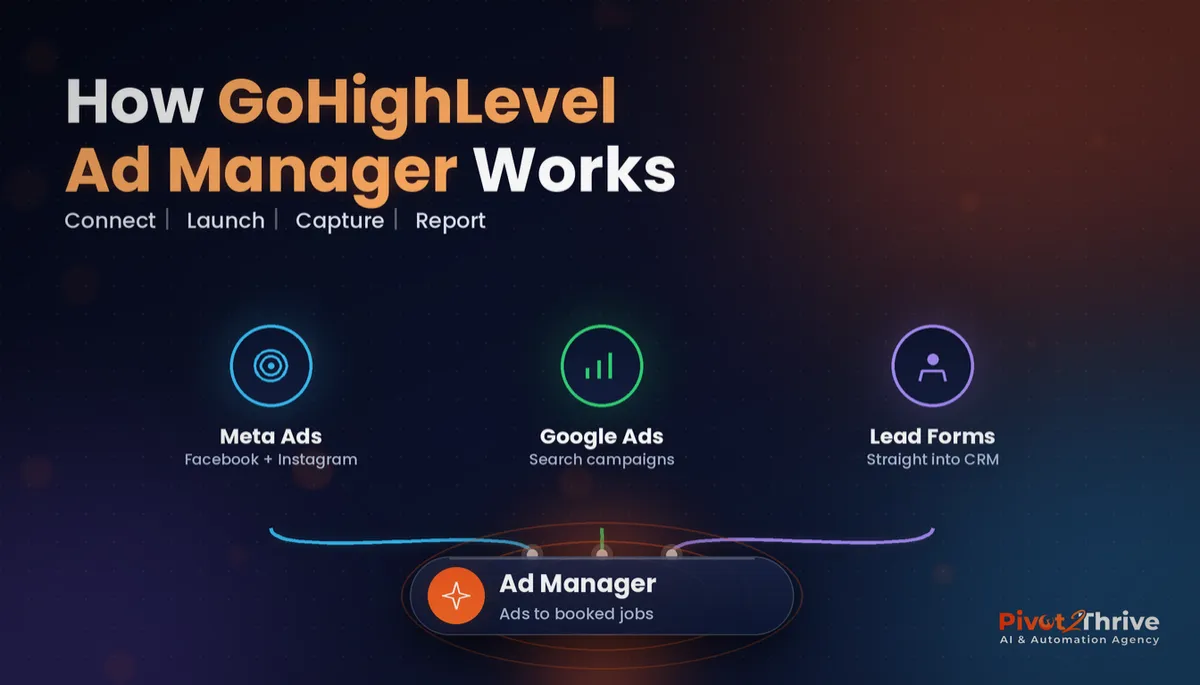
If you also run ads for flu or travel-vaccination season, our GoHighLevel Ad Manager guide shows how to send those leads straight into the same booking calendar.
An Australian example: a suburban Perth pharmacy before flu season
Here is an illustrative scenario. A family-owned pharmacy in suburban Perth with two pharmacists and three assistants is swamped every autumn when flu-vaccination calls peak.
They set up an AI receptionist to answer hours and booking questions, connect a vaccination calendar with 10-minute slots, and route any medicine questions to the dispensary phone.
Day to day, the counter phone rings far less. Patients book their own vaccination slots at 9 pm, receive an SMS reminder the day before, and arrive at their booked time.
The owner notices it most in the queue: pharmacists stop being interrupted mid-dispense for "what time do you close?" calls, and vaccination clinics run to schedule.
Common pharmacy AI mistakes to avoid
- Letting the AI answer clinical questions. Even a well-meant answer creates risk. Hard-code a handover for anything about medicines, symptoms or interactions.
- Forgetting public-holiday hours. If the AI gives Christmas callers the wrong hours, trust drops fast. Update holiday hours weeks in advance.
- No human fallback. Patients must always be able to reach a person. Make "speak to a pharmacist" work on the first ask.
- Booking without buffers. Vaccination slots without paperwork and observation time back up the whole store.
- Skipping disclosure. Callers should know they are talking to an AI. Our AI disclosure guide explains the simple wording to use.
Get these right and the AI becomes a reliable extra pair of hands, not another thing to manage.
Frequently Asked Questions
Can an AI receptionist give medicine advice in a pharmacy?
No. An AI receptionist in a pharmacy should never give dosage, interaction or side-effect advice. It should answer non-clinical questions such as hours and bookings, and transfer anything about medicines straight to a pharmacist.
What calls can AI handle for an Australian pharmacy?
AI can handle opening hours, location and parking, vaccination and service bookings, rescheduling, and taking details for script-ready or stock requests. Staff then confirm script status or stock and call the patient back.
How many community pharmacies are there in Australia?
According to the Pharmacy Guild of Australia's Vital Facts on Community Pharmacy (January 2026), there were 6,013 community pharmacies in Australia as of June 2025, handling more than 443.6 million patient visits a year.
Is using AI in a pharmacy allowed under Australian privacy law?
Yes, provided it handles personal and health information in line with the Privacy Act and the Australian Privacy Principles. Collect only what is needed, tell callers they are speaking with an AI, and keep your privacy policy up to date.
How long does it take to set up AI for a pharmacy?
A focused setup covering phone answering, a vaccination booking calendar and SMS reminders usually takes two to three weeks, including a week of call logging and testing. Start with hours and bookings, then expand.
Will an AI receptionist replace pharmacy assistants?
No. It takes repetitive phone work off the counter so assistants can serve customers in the store. Most pharmacies use the time saved for customer service and in-pharmacy services.
Related Articles
Our services
- PowerPivot Leads Pro — AI lead generation and follow-up
- AI Receptionist Agent — answer every call, 24/7
Keep reading
 AI Receptionist for Medical Centres in Australia
 AI for Hearing Clinics in Australia
 Reduce No-Shows with AI Appointment Reminders
 GoHighLevel Ad Manager: Run Facebook and Google Ads From Your CRM
Everything else