
AI Agency Proposal Follow-Up: How I Would Chase Sent Proposals Without Sounding Desperate (2026 Australian Guide)
Last updated: November 2026.
 By Dr Priya Jaganathan, Certified AI Tech Stack Consultant · Pivot 2 Thrive · Updated 15 November 2026 · 7 min read
The follow-up cadence, scripts and pipeline setup I would use after sending an AI automation proposal, so good deals do not die in someone's inbox.
Most AI agency proposal follow-up fails for one of two reasons: the agency sends one "just checking in" email and gives up, or it chases so hard the prospect stops replying out of awkwardness. Both lose deals that were genuinely winnable.
In November and December the problem gets worse. Australian business owners are juggling Christmas trading, staff leave and end-of-year budgets, so a proposal that arrived on a busy Tuesday can sink without a trace. Here is exactly how I would follow up.
Some links below are affiliate links — if you sign up through them, Pivot 2 Thrive may earn a commission at no extra cost to you. It never changes what we recommend.
Good AI agency proposal follow-up is a planned 14-day sequence, not a series of check-ins. Book the next conversation before you send the proposal, then follow up with something useful at each touch: a short video walkthrough, a relevant example, a decision-making question and a clear close-out message. Track every proposal in a pipeline stage so none are forgotten.
I'm Dr Priya Jaganathan — Go High Level Certified Admin, Certified AI Tech Stack Consultant and keynote speaker. At Pivot 2 Thrive I build these systems for Australian businesses every week, so this guide is written from the build, not the brochure.
AI agency proposal follow-up is part of the sale, not an afterthought
AI agency proposal follow-up is the planned set of conversations between sending a proposal and getting a yes or a clear no. It covers when you contact the prospect, what you say, which channel you use and when you stop.
The proposal itself rarely closes the deal. It gives the buyer something to take to a business partner, an accountant or a manager, and your follow-up is what keeps that internal conversation moving.
If your proposals are not landing in the first place, fix the document before the follow-up. Our AI agency proposal template covers structure, pricing and scope.
Why proposal follow-up matters more for AI agencies in 2026
Australian small businesses are still deciding how far to go with AI. The National AI Centre's AI Adoption Tracker found that 43% of Australian SMEs reported some level of AI adoption in the December 2025 to February 2026 quarter, down slightly from 45% the quarter before. Many of your prospects are still in that undecided group.
That means hesitation is normal, not a rejection. An owner who has never bought automation needs time, reassurance and proof before signing a retainer.
Silence usually means "not yet", and a respectful, useful follow-up gives them a reason to come back to you. When a prospect does say no, the approach changes, and I cover that in how I would win back lost deals.
How I would follow up an AI agency proposal in 6 steps
This is the 14-day sequence I would run for any proposal over a few thousand dollars. It takes about 20 minutes of your time per proposal once the templates are written.
1. Book the review call before you send. At the end of your discovery or demo call, schedule a 20-minute proposal review two or three business days out. This one habit removes most of the chasing, because the next step is already in both calendars.
2. Send the proposal with a short video. Record a three-minute screen walkthrough of the proposal and send it with the document. Prospects often forward it to the person who signs off, and your explanation travels with it.
3. Day 3: send something useful. Share one relevant example, such as a similar build for another business in their industry, with one sentence on why it matters to them. Do not ask "any questions?" — give them something worth replying to.
| Day | Channel | Message purpose |
|---|---|---|
| Day 0 | Email plus video | Proposal, walkthrough and the booked review call |
| Day 3 | A relevant example or result from a similar build | |
| Day 6 | Phone call | Ask what the decision depends on |
| Day 9 | SMS | Offer a smaller first phase or a different start date |
| Day 14 | Polite close-out that invites a yes or a no |
4. Day 6: call and ask what the decision depends on. "What would need to be true for you to go ahead?" uncovers the real objection, whether it is budget, timing, a partner's approval or fear of disrupting staff.
5. Day 9: offer a smaller first step. If budget or timing is the issue, offer a phase-one build or a January start. If they are worried about the tech, our guide to handling AI agency sales objections has scripts for the common pushbacks.
6. Day 14: send a close-out message. Something like: "I haven't heard back, so I'll assume the timing isn't right and close this off for now. If anything changes, just reply to this email." Close-out messages often get the fastest replies of the whole sequence.
Build the sequence in HighLevel as a pipeline stage called Proposal Sent, with a workflow that creates the call task and sends the templated touches, stopping automatically when the opportunity moves to Won or Lost.
A proposal without a booked next step is a hope, not a sales process.
Not on HighLevel yet? Start with a free 30-day trial — enough time to build everything in this guide before you pay a cent.
An Australian example: a Melbourne agency closing before Christmas
Here is an illustrative scenario. A two-person AI agency in Melbourne sends a proposal for an AI receptionist and lead follow-up system to a mid-sized plumbing business in late November.
The review call is already booked for three days later, but the owner reschedules twice because of jobs. The agency's Day 6 call uncovers the real issue: the owner's business partner handles the money and has not seen the proposal.
The agency sends the three-minute video to the business partner and offers a phase-one build covering only after-hours calls, starting in January.
Both partners sign in mid-December. The agency starts the new year with a booked build and a clear path to the full retainer.
Proposal follow-up mistakes AI agencies make
- "Just checking in" emails. They add nothing and are easy to ignore. Every follow-up should include something useful or a specific question.
- Following up with no end date. Endless chasing damages the relationship. A clear close-out at day 14 protects your reputation and often prompts a decision.
- Discounting too early. Cutting the price before you know the objection trains buyers to wait. Offer a smaller scope, not a lower rate.
- Not tracking proposals in a pipeline. Proposals kept in your sent folder get forgotten. Give every proposal a stage, a value and a next action.
- Ignoring the second decision-maker. Ask early who else is involved, and make sure they see the proposal explained properly.
Holiday timing matters too. If you are closing over Christmas, set up GoHighLevel holiday auto-replies so prospects who reply while you are away still get an answer.
Frequently Asked Questions
How long should an AI agency wait before following up a proposal?
Follow up within two to three business days, ideally on a review call you booked before sending the proposal. After that, space touches out across about 14 days so you stay present without being pushy.
How many times should I follow up a proposal?
Four or five touches over 14 days works well for most AI agency proposals: a useful example, a phone call, a smaller-scope offer and a polite close-out. Stop after the close-out unless the prospect replies.
What should I say when a prospect goes quiet after a proposal?
Ask what the decision depends on, rather than asking if they have questions. A question like "What would need to be true for you to go ahead?" brings out the real objection so you can address it.
Should I offer a discount to close a proposal?
Usually not. Offer a smaller first phase or a different start date instead, because discounting before you understand the objection lowers your price without solving the real problem.
Can I automate proposal follow-up in GoHighLevel?
Yes. Create a Proposal Sent pipeline stage and a workflow that schedules call tasks and sends templated emails and SMS on set days, stopping automatically when the opportunity is marked Won or Lost.
How many Australian small businesses are using AI?
The National AI Centre's AI Adoption Tracker found 43% of Australian SMEs reported some level of AI adoption in the December 2025 to February 2026 quarter, so many prospects are still deciding.
Still deciding on a platform? Try HighLevel free for 30 days and build your Proposal Sent pipeline before your next proposal goes out.
Related Articles
Our services
- PowerPivot Leads Pro — AI lead generation and follow-up
- AI Receptionist Agent — answer every call, 24/7
Keep reading
 AI Agency Proposal Template: How to Write Proposals That Close
 AI Agency Sales Objections: How to Handle the 7 Pushbacks Australian Clients Give
 AI Agency Lost Deals: How I Would Win Back Prospects Who Said No
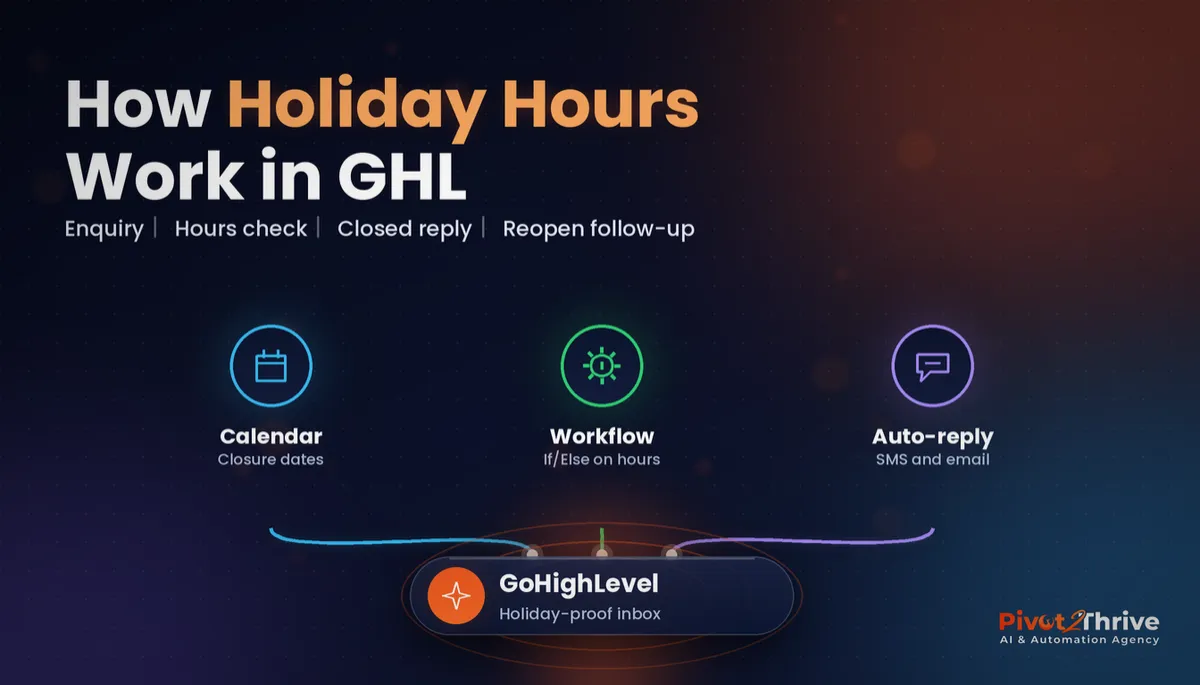 GoHighLevel Business Hours: Set Up Christmas Closure Auto-Replies That Still Capture Every Lead
 AI for Bike Shops in Australia: Book Every Service Before the Christmas Rush
Everything else