
AI Agency Retainer Renewals: How I Would Run a Year-End Review That Keeps Clients Into 2027 (Australian Guide)
Last updated: November 2026.
 By Dr Priya Jaganathan, Certified AI Tech Stack Consultant · Pivot 2 Thrive · Updated 7 November 2026 · 7 min read
A practical year-end review process that shows each client what your automations delivered, fixes the gaps and gets next year's retainer signed before Christmas.
AI agency retainer renewal is the quiet deadline most Australian agency owners leave too late. Contracts written in January come up in December, owners switch off for the summer, and a client who never saw their results drifts away in February.
Run a short, numbers-first review with every retainer client six to eight weeks before their contract ends. Show their year in their own data, name what still leaks, and put a written 2027 scope and price in front of them before the Christmas shutdown.
I'm Dr Priya Jaganathan — Go High Level Certified Admin, Certified AI Tech Stack Consultant and keynote speaker. At Pivot 2 Thrive I build these systems for Australian businesses every week, so this guide is written from the build, not the brochure.
AI agency retainer renewal is…
AI agency retainer renewal is the process of reviewing a client's results, agreeing the next period's scope and price, and re-signing the agreement before the current term ends.
It is not an invoice reminder. A good renewal is a structured meeting backed by data, and it is the one time each year a client actively decides whether you are worth keeping.
It sits alongside your regular reporting. If you already run a quarterly business review, the year-end renewal is simply the fourth QBR with a contract attached.
Why year-end renewals decide your 2027 revenue
Keeping a client is worth far more than replacing one. Frederick Reichheld of Bain & Company, writing with Phil Schefter in the Harvard Business Review (2000), reported that a 5% increase in customer retention can lift profits by 25% to 95%, depending on the industry.
For an agency the maths is blunt. A retained client needs no proposal, no discovery call and no rebuild, so the second year of a retainer is usually the most profitable one.
Timing makes it urgent. In Australia, December and January are dead months for decisions: owners are on leave, staff are rostered thin and anything unsigned by mid-December tends to wait until February.
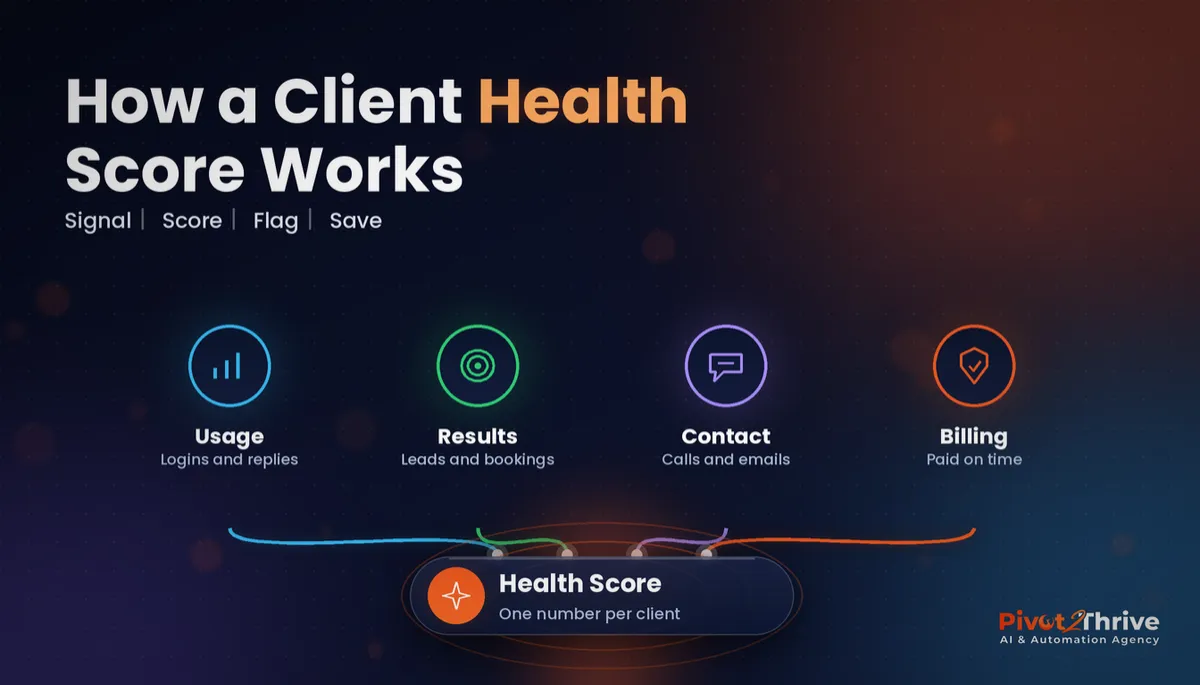
The early warning signs show up well before the renewal date. A client health score tells you which accounts need the review first and which ones are safe to leave until the last week.
How I would run the renewal review in 6 steps
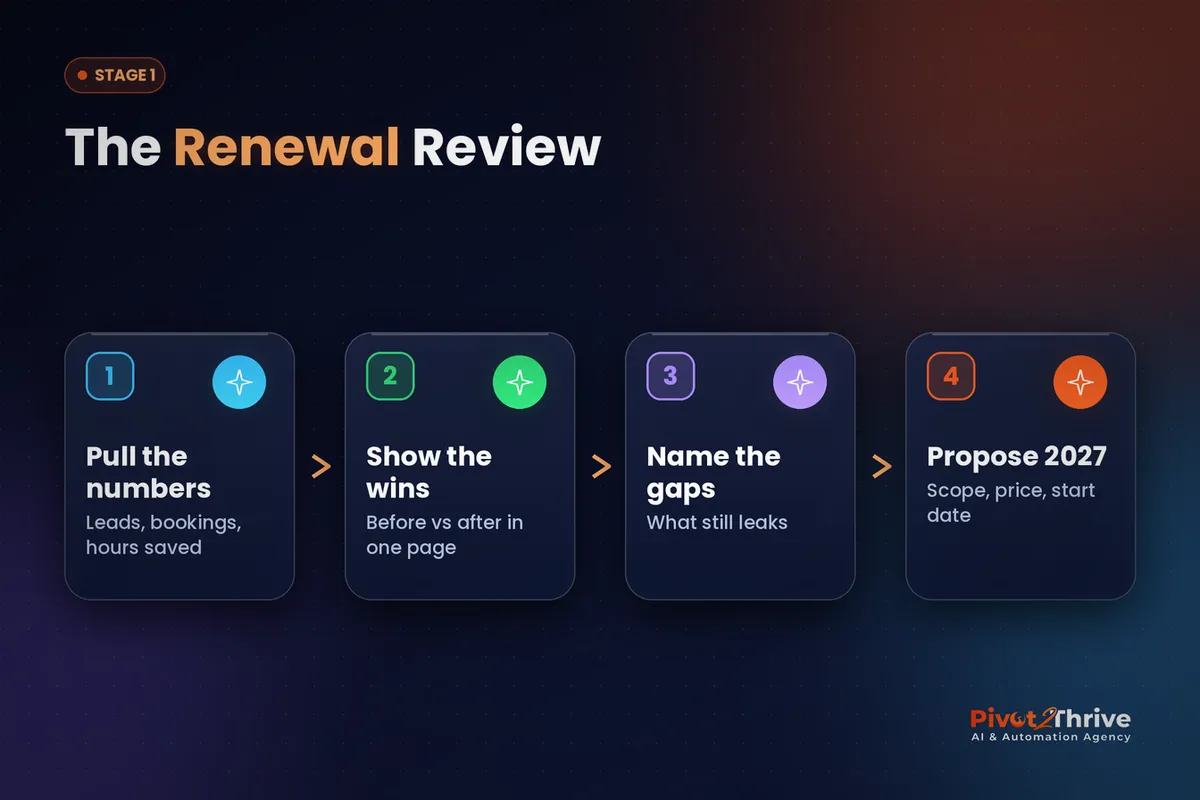
This is the process I would use for every retainer ending between December and March. Budget about two hours of preparation and a 30-minute meeting per client.
1. List every contract end date. Pull each client's term from your agreements into one view, sorted by end date. In HighLevel, a custom date field on the company or contact record plus a smart list filtered to the next 90 days does the job.
2. Pull the client's own numbers. Export the year from their account: enquiries captured, calls answered by the AI receptionist, bookings made, average response time and the hours of admin your workflows replaced. Use their data, not your agency averages.
3. Turn the numbers into one page of wins. Show before and after for the two or three metrics the owner cares about, in plain words. "Missed calls dropped from about one in four to almost none" lands better than a chart of call volume.
| Review section | What goes in it | Time to prepare |
|---|---|---|
| The year in numbers | Enquiries, bookings, response time, hours saved | 45 minutes |
| Wins | Two or three before-and-after results in plain English | 20 minutes |
| Gaps | What still leaks, with an honest reason why | 20 minutes |
| 2027 proposal | Scope, price, start date and one new quick win | 30 minutes |
4. Name the gaps honestly. Every account has something that did not work, such as a review campaign the team never used or a form that still sends leads to a dead inbox. Raising it yourself builds trust; letting the client find it destroys it.
5. Put the 2027 proposal in writing. One page: what stays, what changes, the monthly price, the start date and one new quick win. If you are adjusting price, give the reason and offer a trimmed option at the current rate so the client chooses between two yeses.
6. Book the meeting and the follow-up together. Send the calendar link with the review attached, then set a task for three business days after the meeting. Most renewals that stall do so because nobody followed up before the Christmas break.
Run these six steps across the whole book and you will know by early December which clients are renewing, which need a rescue call and which are leaving. That clarity alone makes January cash flow far easier to plan.
A client who sees their own results renews. A client who only sees your invoice starts shopping around.
An Australian example: a Brisbane agency's November
Here is an illustrative scenario. A three-person AI agency in Brisbane has 14 retainer clients, nine of them on calendar-year terms ending 31 December.
In the first week of November the owner adds a contract end date field to every account, builds a renewal pipeline stage and creates a task to fire 60 days before each end date. She then blocks two afternoons a week for review prep.
Each review fits on two pages. A dental clinic sees its after-hours enquiries and booked appointments for the year; a plumbing business sees its missed-call rate and the jobs that came from text-back. Both get a short list of gaps and a written 2027 scope.
By 12 December, seven of the nine clients have signed, one has agreed in principle for February, and one has given notice. Because the cancellation came early, the owner has six weeks to replace that revenue instead of discovering it in late January.
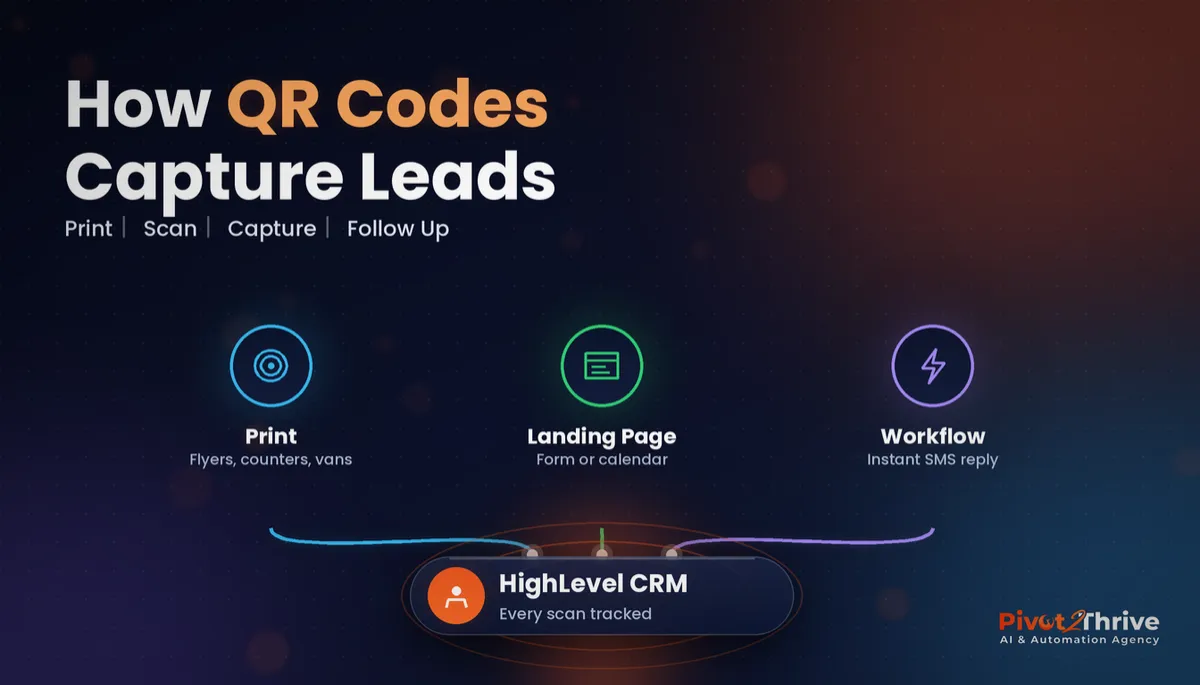
The same agency uses the review to add a small quick win for two retail clients, such as GoHighLevel QR codes on counter cards for Christmas trade, which gives the renewal something new to say yes to.
Retainer renewal mistakes to avoid
- Starting in December. By then owners are mentally on holiday; start in early November so decisions land before the shutdown.
- Leading with price. Opening with a new rate makes the meeting a negotiation. Lead with results, then scope, then price.
- Using agency averages. Clients do not care what your typical client achieved. Show their own numbers from their own account.
- Hiding what failed. Clients notice. Naming the gap and the fix is what turns a review into a reason to stay.
- No follow-up task. A verbal yes in a meeting is not a signed agreement. Set the follow-up before you leave the call.
If the review shows the client wants more than the current scope covers, treat it as an expansion conversation, not scope creep. The approach in upselling existing AI agency clients fits straight into step five.
Frequently Asked Questions
When should an AI agency start the retainer renewal conversation?
Start six to eight weeks before the contract end date, which for a calendar-year retainer means early to mid November in Australia. That leaves time for a review meeting, a written proposal and a decision before the Christmas shutdown, when most owners stop replying to email.
What should be in an AI agency year-end client review?
Include the client's own numbers for the year (enquiries handled, bookings made, response times, hours of admin saved), a short list of what still leaks, and a proposed scope and price for next year. Keep it to one page of results and one page of proposal so the owner can read it in five minutes.
Should I raise my retainer price at renewal time?
Renewal is the most natural moment to adjust price, as long as the review shows clear value first. Give written notice, explain what has changed in scope or cost, and offer a choice between the current scope at the new rate and a trimmed scope at the old rate.
How do I renew a client who has gone quiet?
Treat silence as a risk signal, not a yes. Send a short email with three headline results from their account and ask for a 20-minute call; if there is still no reply after a week, call the owner directly rather than adding more email.
Is an automatic rollover clause better than a formal renewal?
A rollover clause protects cash flow, but it should not replace the review conversation. Clients who roll over without seeing their results are the ones most likely to cancel in February, so run the review whether the contract renews automatically or not.
What tools help an AI agency manage renewals?
A CRM pipeline with a renewal stage, a task that fires 60 days before each contract end date and a reporting dashboard per client cover most of it. Many Australian agencies run all three inside HighLevel so the renewal date, the results and the follow-up live in one place.
Related Articles
Our services
- PowerPivot Leads Pro — AI lead generation and follow-up
- AI Receptionist Agent — answer every call, 24/7
Keep reading
 The AI Agency Quarterly Business Review: How to Run a QBR That Retains Clients
 AI Agency Client Health Score: Spot At-Risk Clients Before They Cancel
 AI Agency Client Retention: How to Keep Clients Past Month 3
 AI Agency Price Increases: How to Raise Your Rates Without Losing Clients
 GoHighLevel QR Codes: Turn Flyers, Counters and Vans Into Tracked Leads
Everything else